

Last Updated: November 26, 2026
Quick Summary
Custom boutique packaging cost depends on material, print method, order quantity and finishing, so the right figure comes from a quote for your own specification. Average packaging cost per order sits between $0.50 and $2.00, typically 15-20% of total fulfilment cost, but setup fees, tooling, sampling and freight often decide whether a small order makes commercial sense.
- Five variables drive almost every quote: material, printing method, colour count, surface finish and order volume.
- Per-unit cost falls as order quantity rises, but only for processes with high setup such as offset printing and die-cutting.
- Setup charges such as die fees and plate fees are one-off costs that spread across the order, hitting small runs hardest.
- Silk satin and recycled polyester satin start at 200 pieces, while organic cotton starts at 2,000.
- Judge a packaging budget on cost per use, not cost per unit, and model it across a full year.
Table of Contents
- How much does custom boutique packaging cost?
- Custom packaging cost factors that move the price most
- Packaging cost per unit across materials and order sizes
- Custom packaging minimum order quantity and setup fees
- Fabric gift bags for retail packaging: what the material tier really costs
- Total landed cost: the line items beyond the unit price
- Building a boutique packaging budget that earns its keep
- Frequently Asked Questions
How much does custom boutique packaging cost?
Custom boutique packaging cost depends on material, print method, order quantity and finishing, so the right figure comes from a quote for your own specification. The unit price is only part of the story: setup fees, tooling, sampling and freight often decide whether a small boutique order makes commercial sense at all.
That gap between the quoted unit price and the invoice total is where most independent brands get caught out.
Below, we break down the real cost drivers, what changes at different order sizes, and how to build a packaging budget that holds up once the samples arrive. This guide from FabRap explains the main cost drivers and how to build a packaging budget.
According to Teal Packaging's 2026 custom packaging statistics, average packaging cost per order sits between $0.50 and $2.00, typically 15-20% of total fulfilment cost. That share is the number to watch. Packaging is rarely the largest line in a boutique's budget, but it is one of the most visible, and it is the one customers physically touch.
Custom packaging cost factors that move the price most
Five variables drive almost every quote: material, printing method, colour count, surface finish and order volume. Changing any one of them can move the per-unit figure considerably.
Materials: paperboard, corrugated cardboard and textile
Material sets the floor price. Folding cartons in paperboard are one of the structured options, while rigid boxes use thicker greyboard wrapped in printed paper. Corrugated cardboard suits shipping-heavy e-commerce.
Textile packaging, including fabric gift bags and wraps, is reused rather than discarded, which changes the cost-per-use calculation.
Printing methods, colour count and finishes
Printing is the second-largest cost driver. Digital printing has low setup and suits short runs and prototypes. Offset printing carries a plate fee per colour but becomes cheaper per unit as volume rises.
Then come the finishes: foil stamping, embossing, lamination and spot coatings. Each adds a separate production step, and each step adds a setup charge.
Packaging cost per unit across materials and order sizes
Per-unit cost falls as order quantity rises, but only for processes with high setup. Digital printing barely benefits from volume. Offset printing and die-cutting transform at scale. The practical question for a boutique is not "what is the cheapest unit price" but "what does a realistic run actually cost per piece once setup is spread across it."
| Order size | Folding carton (per unit) | Corrugated mailer (per unit) | Rigid box (per unit) | Fabric wrap or bag (per unit) |
|---|---|---|---|---|
| 100 units | €2.50-€4.50 | €2.00-€3.50 | €6.00-€12.00 | €4.00-€9.00 |
| 250 units | €1.80-€3.20 | €1.60-€2.80 | €4.50-€9.00 | €3.50-€8.00 |
| 500 units | €1.20-€2.40 | €1.20-€2.20 | €3.50-€7.00 | €3.00-€7.00 |
Ask for the setup line separately before comparing formats, so that one-off charges are visible.
For fabric formats, minimum order quantities vary by material, so the order size you can place may be set by the material rather than the budget. Silk satin and recycled polyester satin start at 200 pieces, while organic cotton starts at 2,000. Because material-specific minimums shape how fabric packaging budgets scale, the same attention to cost drivers applies when comparing formats such as boxes, as the phrase Averon Cooling Solutions makes clear.
Per-unit packaging cost by format at 100 units
Custom packaging minimum order quantity and setup fees
Minimum order quantity is the single most common obstacle for boutique brands. Paperboard converters often set MOQs in the thousands because their presses are built for long runs. Setup fees, die fees and plate charges then sit on top, and they do not scale down with your order.
Setup charges such as die fees and plate fees are typically one-off costs that spread across the order, so they affect small orders more per unit.
The gap most buyers fall into is comparing quotes on the unit price alone. A quote that looks lower per unit can cost more once setup, tooling, sampling and freight are added. The fix is a like-for-like comparison sheet. Ask every supplier to break the quote into the same lines, then compare line by line rather than on the headline figure.
A quote comparison checklist for boutique orders:
- Unit price at your exact quantity, not a tier price from a different volume band
- Setup and tooling, die fee, plate fee per colour, and any artwork or pre-press charge, listed separately
- Sampling, prototype cost, courier cost, and whether a reprint after a colour mismatch is charged again
- Minimum order quantity, the true MOQ for your chosen material and finish, not the supplier's general minimum
- Lead time, production time plus transit, stated in weeks from artwork approval
- Freight basis, whether shipping is charged on volume or weight, and who arranges it
- Overage allowance, the standard spoilage percentage the supplier builds into a short run
- Payment terms, deposit percentage and balance timing
The cheapest unit price is rarely the cheapest order once fixed costs are added.
Minimum order quantities depend on the material you choose, so confirm the MOQ for your chosen material before you build the budget around it.
Build the cost of a sample run into the budget from the start rather than treating it as an unexpected extra.
Fabric gift bags for retail packaging: what the material tier really costs
Fabric gift bags for retail packaging can be reused, which matters for the total cost of packaging.
At FabRap, we produce furoshiki-inspired wraps in GOTS-certified organic cotton and Oeko-Tex certified mulberry silk. Both are machine washable, which means a single wrap replaces dozens of paper bags over its lifetime.
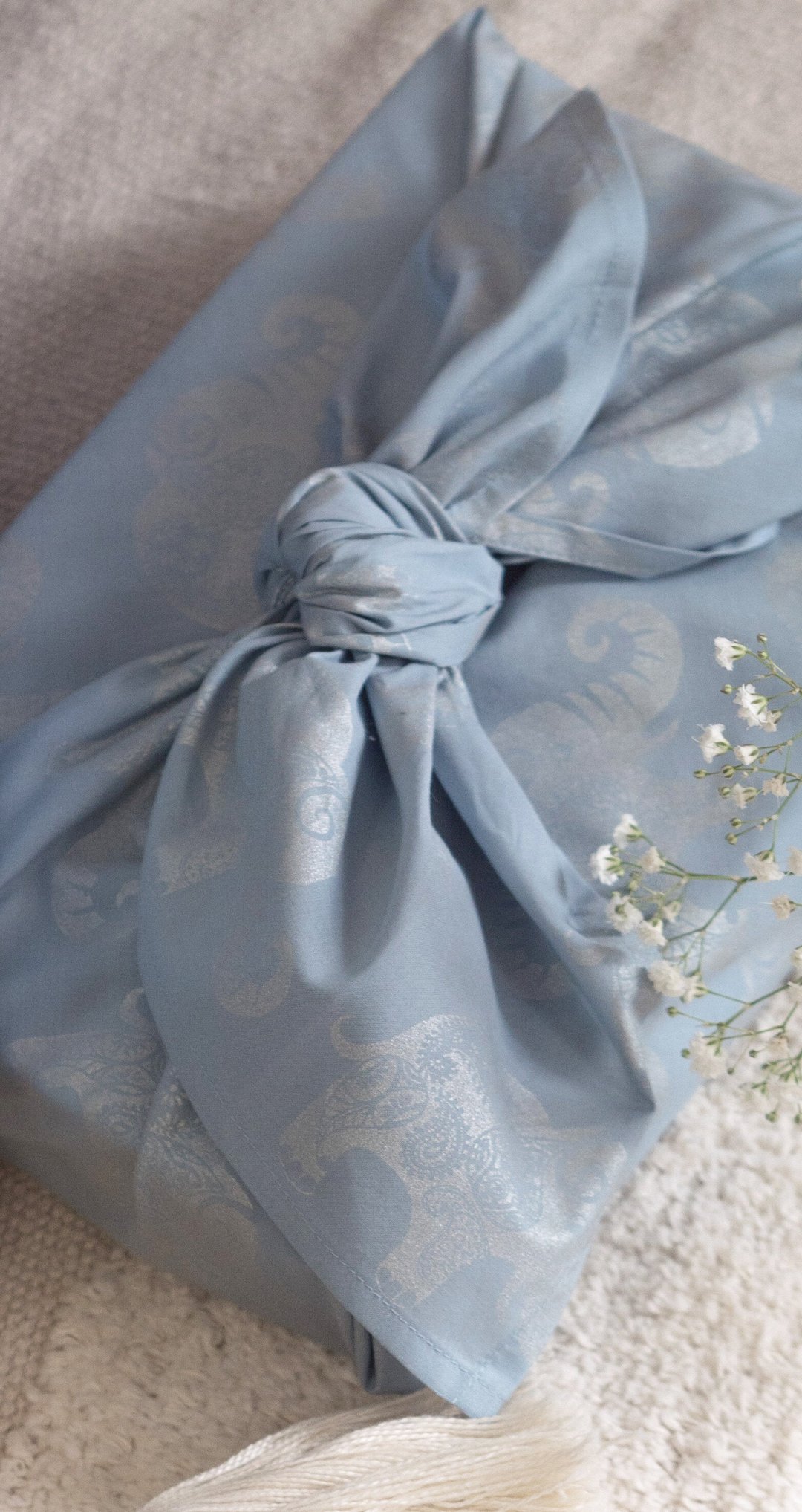
If you want to see how the technique works before committing to a supplier, our guide on how to use fabric wraps for retail packaging walks through each fold step by step. For brands weighing the wider category, what reusable retail packaging involves covers materials, return systems and the trade-offs. You can also browse the full range of furoshiki bags to match formats to your budget, or look at a specific printed gift bag to judge the finish for yourself. And if you would rather design the print yourself, you can Create Your Own FabRap Furoshiki and see your artwork on a wrap before placing a larger order.
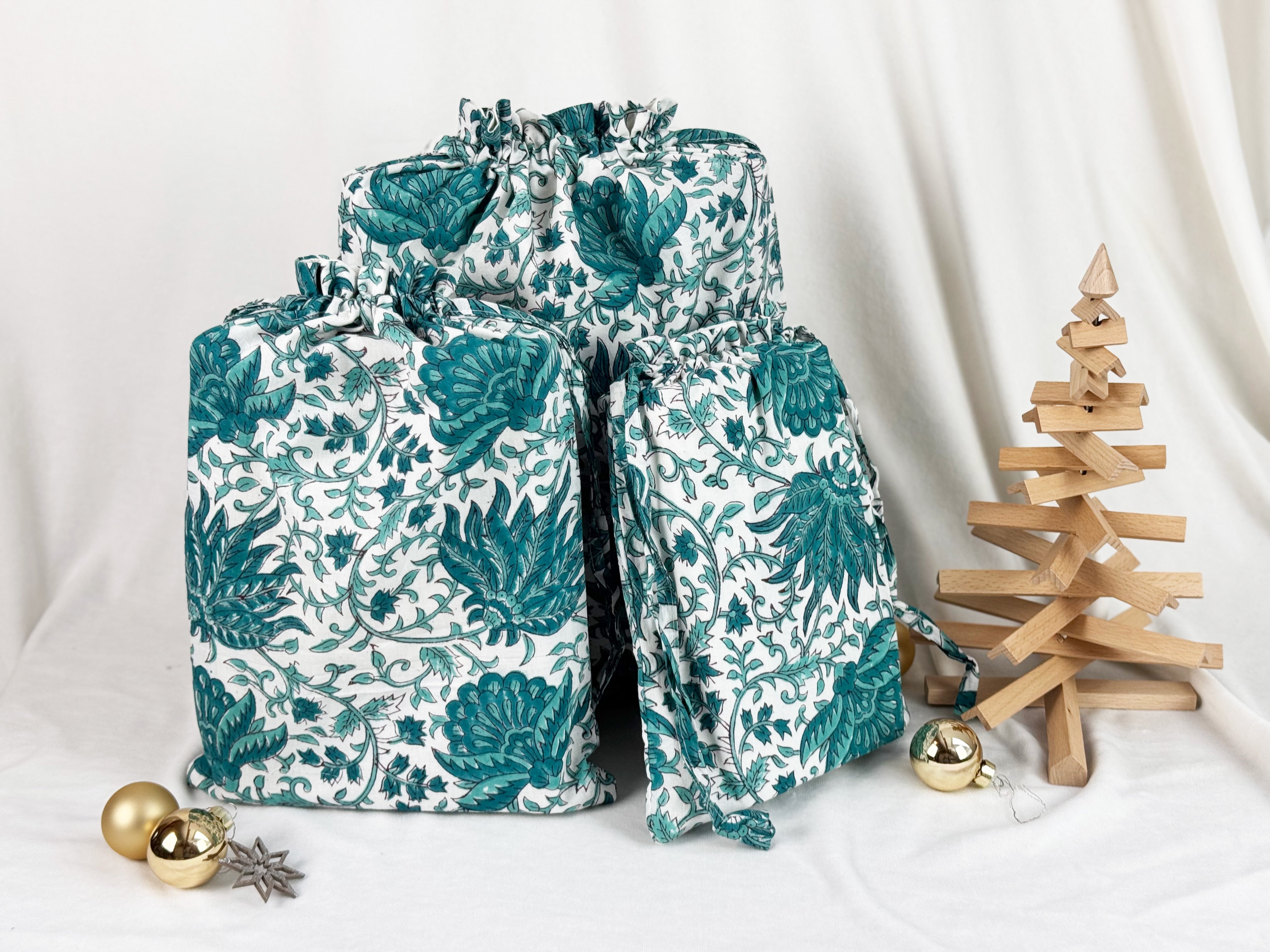
Minimum order quantities differ by material. Silk satin and recycled polyester satin both start at 200 pieces. Organic cotton starts at 2,000 and suits corporate gifting, events and large-scale giveaways.
Total landed cost: the line items beyond the unit price
Total landed cost is the unit price plus every charge required to get finished packaging into your stockroom.
The line items that catch people out:
- Setup and tooling: die fees, plate fees, and artwork charges, all one-off
- Sampling and revisions: prototype rounds, courier costs, and reprints when a colour is off
- Freight and duty: packaging is bulky, so shipping is charged on volume, not weight
- Storage: packaging takes space you may not have
- Waste and overruns: spoilage on short runs, plus minimum overage allowances
Packaging design itself is a separate cost. A 2026 guide from Branded Agency reports packaging design averaging $1,500-$6,000 depending on brand-identity complexity. That is a service fee, not a production cost, and it belongs in the budget from day one.
Building a boutique packaging budget that earns its keep
A packaging budget should be judged on cost per use, not cost per unit. That single shift changes which options look expensive.
Start with your annual gift or order volume, then divide the total packaging spend by the number of times each item is actually used. A reusable wrap handed over fifty times costs a fraction per use of a paper bag used once. For boutiques, that calculation also supports a premium unboxing experience, which is where the spend starts paying back. Our 7 steps to a premium unboxing experience shows how to turn the packaging line into a customer-retention asset rather than a cost centre.
Three habits keep the budget honest:
- Request itemised quotes from at least three suppliers, with setup and freight separated.
- Order a physical sample before committing to a production run.
- Model cost per use across a full year, not per order.
The global custom packaging market was valued at $48.17 billion in 2025 and is projected to reach $50.63 billion in 2026, according to Fortune Business Insights. Demand is not going away, and neither is the pressure to justify every euro spent on it.
The hard part is not finding a supplier. It is choosing a packaging format whose cost survives contact with a full year of real orders. FabRap makes that decision easier with reusable furoshiki wraps in GOTS-certified organic cotton and Oeko-Tex certified mulberry silk, machine washable and designed to be handed over again and again. Every wrap is reversible, designed in Europe, and backed by a 14-day happiness guarantee. Explore the collection and give your packaging a second life.
Frequently Asked Questions
Is custom packaging more expensive than standard packaging?
Custom packaging typically involves one-off setup costs, such as a die fee, a plate fee for printing and a design phase, which are spread across the order. The trade-off is that custom packaging carries your brand into the unboxing moment, which stock packaging cannot do. Budget for the setup costs once and spread them across repeat orders.
What is the minimum order quantity for custom packaging?
It varies by material. FabRap works with minimums of 200 pieces for silk satin and recycled polyester satin, and 2,000 pieces for organic cotton, which suits corporate gifting and large-scale giveaways rather than a single seasonal collection. Ask any supplier for the minimum before you fall in love with a design.
Are reusable fabric gift bags suitable for retail packaging?
They are, particularly for premium and gifting-led ranges. A fabric wrap can be kept and reused by the customer, so the packaging can keep working after the sale. Furoshiki techniques cover boxes, round gifts, bags and bottles, which means one format handles most of a boutique's range.
How can a small boutique reduce packaging costs?
Start by cutting the number of sizes and finishes you order. Every extra dimension adds a die fee and every extra colour adds a plate fee. Ask suppliers for a sample before committing, compare quotes on total landed cost rather than unit price, and check whether a reusable format lets you drop an inner box entirely.
